
The Adoration of the Kings, 1564
43.7" x 32.68"
Oil on Board
Pieter Bruegel the Elder
Click on the image to open full size.


 |
Self Portrait as The Man of Sorrows Graphite, 1522 408 x 290 mm Albrecht Durer |

 Neil Armstrong in the Lunar Module After the First Moon Walk, July 20th., 1969.
 Andrew Wyeth, Memory & Magic, Knutson, 2008
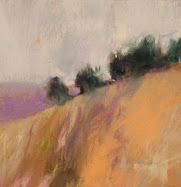
 Violet Woods
 Ponte Vecchio - Old City
I have found that the requirements of good abstract work are more taxing on my brain, and simple compositional mistakes have a greater impact.


Congratulations on the Weblog awards for 2007. It is a shame that my blogs, and the blogs of countless others in my blog community, will not be eligible. Of course, we are talking about the art blogs.This cause is not about me or my friends getting another award. It goes to the perception of art in civilization. Many simply don't see it on their radar screen even in an abstract sense. I have come off snotty, probably, which isn't helping the cause of art in general. Maybe some of you gentle readers can add to my thread at the forum, or even better, add a few threads. Registration required, but painless. Act now, since the nominations have been opened.
No, not photo blogs! Please, for the love of all that is decent good in this world, we are trying to have a civilization here!
Notice that I stopped short of declaring the blog awards "uncultured"!
Never mind. I can see that art is, as the critics have claimed, dead.
Now that I have, hopefully, made you feel silly, let's get busy and include this category in your awards. By the way, I will inform you (and this is painfully necessary) that "art" is not photography, but does include fine art photography, and is separate from the category of "culture". However, it goes without citation, that culture's greatest asset has been art - at least for a couple of millenia.
Back to the art category: Wikipedia has correctly suggested art as having two broad categories: "Visual Art" and "Arts".
Thanks for your attention to this, Weblog Awards.
 Abstract Reds Over Blues
Intuitive ChoicesNew Links for the quoted post:
Under the tutelage of Diane Townsend I painted this abstract work. It has some elements of color field painting, like Mark Rothko, and extensive gestural elements. The gestural nature is in keeping with the drawing roots of the pastel medium. I like the way the paper's surface is evident, and yet the color blending, and heavily worked nature of the piece makes it work as a painting for me.
Let's talk a little bit about intuitive choices in fine art. The choices that a child makes are very intuitive, because their knowledge base is limited. The hands start moving, and the limitations are the length of their little arms, and the characteristics of the tools. They are mostly trying these tools out for the very first time.
A great deal is made of technique in art. The pastel medium is no exception. In fact, technical skill is probably too emphasized in this medium. It's supposed to be hard, you see. And, admittedly, there is much to know (much that I do not know!). Sometimes beginning steps are not rewarded very well by the outcomes.
"Only when he no longer knows what he is doing does the painter do good things."
Edgar Degas said in a quote posted at Expo Degas.
So, intuition! First sketches with bold gestural marks always work better for me than deliberate and measured work. The thing is to have years and years of drawing from memory in one's back pocket, and then the quick marks made on the paper will seem intentional. I don't subscribe to the subtle and tentative working that is often required of detailed realistic work.
The same goes for compositional choices. It is not easy to describe, but I think that studying good composition is necessary, and then ought to be put out of one's mind. If you can internalize compositional knowledge, it will come out naturally as you draw. The best thing I can say is: "try it".
The ability to critique one's own art becomes more important when you want to be an intuition-driven artist. Did this one really turn out to have the best composition? Color Choices? Does it have too much to say for one painting? Ask these questions of yourself.
Wolf Kahn has a chair that he sits in and ruminates over his finished art. Most artists do take some time and distance away from their works to try and get an objective perspective on their own creations. It's challenging.
The pastel medium is "made to order" for the artist who wants to favor intuitive creation. It is a direct, and rewarding tool. It's interesting to consider that in the book, Wolf Kahn's Pastels, the great colorist chose to make the text a collection of essays on artistic process. A natural fit, I think.

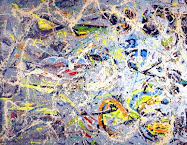
So, here is our dear Teri, holding onto this (virtually worthless to her) painting that maybe could fetch up to $140,000,000 if she can just find the right sucker buyer for it. I am doubled over in laughter watching clips of this lady and a host of arts professionals tearing their hair out trying to make up establish a provenance for it.
If a Pollock really could be purchased for $5, then what is the real intrinsic value of a big canvas covered with drips? If he were any good, why couldn't he just paint a figure, a faerie or a piece of fruit, like any other normal artist?
It all comes down to provenance, in my humble opinion. No signature on the work? Then, if the artist Jackson Pollock painted it, and didn't sign it, then he was devaluing it, himself. Then, he failed to destroy it, which is the accepted norm for artists. It seems that our Teri Horton was offered 9 Million dollars for the piece, but refused it as too little. Bad move.
"Ultimately, it does not matter if the painting is a Pollock or not. The value of it is determined by what someone is willing to pay for it. There is no intrinsic value of any 'Art' piece. There is no MSRP in the art world. She was offered 2 million dollars for it, so that is what it is currently worth (if that offer even still stands). If she rejects that offer and /or it is rescinded, and there is no other offer, the painting is worth 5 dollars. plain (sic) and simple. This is economics 101. 'Art' is no exception."
Posted by pmfaricy on Sun, May 6, 2007 9:17 PM ET
Another Blogger's opinion:
http://www.bookofjoe.com/2006/11/what_teri_horto.html
I like her overall thesis, about the failure of art criticism. If this is true-that the critical career is lacking in potency, then there is a vacuum for advice about art based on a theoretical structure. This set of values, or art critical theory, has been a service to art patronage who look for some sort of rational basis for which art should be considered good, and which should not.
... who determines whether art is good. Today, the market itself tends to make stars, giving top dealers and collectors (like Charles Saatchi) the role once reserved for curators and critics.
A museum director confided to me that the market has "pushed museums to the side as arbiters of taste." Nowadays, the public already has an opinion about which new artists are "important" before a museum exhibit can be organized. Only a few museums, like the Whitney, even dare try. It's a fool's errand: If they show artists who aren't the annointed stars, people think the curators are out of touch. If they show the reigning favorites, everyone snipes that the curators are in the pocket of the dealers.
A generation ago, high-brow critics like Meyer Schapiro and Clement Greenberg wrote intelligent criticism that anyone could understand with a bit of effort. They provided a framework for asking questions, so a viewer could learn to evaluate art for himself. Today's scholarly criticism is often obtuse, theoretical, and unhelpful. (I was looking at an art history graduate program recently, and the Art History Department could have changed its name to the Michel Foucault Department without having to alter a single course description.) Newspaper critics may be excellent --especially Jerry Saltz and Tyler Green -- but reviews are case-by-case and don't provide an overall framework, so insecure collectors rely on a thumbs up/thumbs down for each individual show.
Or they rely on dealers, which takes us back to the market creating the stars.
Is there a better way? How should novices learn about contemporary art? Do we leave them, sink-or-swim, to figure it all out for themselves? Or is the art world failing them and, ultimately, itself?
Our previous discussion raised interesting questions about who determines whether art is good. Today, the market itself tends to make stars, giving top dealers and collectors (like Charles Saatchi) the role once reserved for curators and critics.
A museum director confided to me that the market has "pushed museums to the side as arbiters of taste." Nowadays, the public already has an opinion about which new artists are "important" before a museum exhibit can be organized. Only a few museums, like the Whitney, even dare try. It's a fool's errand: If they show artists who aren't the annointed stars, people think the curators are out of touch. If they show the reigning favorites, everyone snipes that the curators are in the pocket of the dealers.
A generation ago, high-brow critics like Meyer Schapiro and Clement Greenberg wrote intelligent criticism that anyone could understand with a bit of effort. They provided a framework for asking questions, so a viewer could learn to evaluate art for himself. Today's scholarly criticism is often obtuse, theoretical, and unhelpful.
(I was looking at an art history graduate program recently, and the Art History Department could have changed its name to the Michel Foucault Department without having to alter a single course description.) Newspaper critics may be excellent --especially Jerry Saltz and Tyler Green -- but reviews are case-by-case and don't provide an overall framework, so insecure collectors rely on a thumbs up/thumbs down for each individual show.
Or they rely on dealers, which takes us back to the market creating the stars.
Is there a better way? How should novices learn about contemporary art? Do we leave them, sink-or-swim, to figure it all out for themselves? Or is the art world failing them and, ultimately, itself?
I think, though, that one would have to effectively indict "the market" in order to fully prove this thesis. The free (art) market does respond to the forces of shared "taste". What is wrong with that? Doesn't the art critic serve a master, too? The university, or some periodical or news media, together with it's readership and advertisers, are the constituents of the professional art critic. You'll notice that I didn't say: "artists" there. Where do they fit in? I would say that the artist's interaction with his buying market should be valued as a viable critique of art. There are filters there, too.
What do you think?
In the past, before I had this blog, I worked hard at unifying my work. My Colorist American Landscapes are a nicely coherent body of work, where abstracted landscapes reveal color stories that speak immediately to the viewer.
Now I have started posting both finished and process sketches, realist paintings (usually of Italy), realist farmscapes, and some abstracts. You may be asking yourself, "How many artists live here?"
I am not, as far as I know, Schizophrenic. In fact, I'll go out on a limb here, and assert that I am not. But, I do enjoy expanding my limits. Growing my artistic abilities, if you will. I have had an urge for some time to return to my realist roots. So, I started the 100 Paintings Project which stays focused on the Italian Landscape and realism, with effects of my colorist tilt. Then I put it on another blog, hopefully to reduce confusion between my styles and genres.
It's perfectly okay for Pablo Picasso to inhabit any number of genres. But not an unknown such as myself. BTW, I saw an awesome artist's tagline the other day : "So-and-so, the nation's favorite unknown artist". Anyway, my goal is to stay focused for both artistic and marketing reasons. At the art fairs, I am rigidly focused on one style for just those reasons. You have mere seconds to impress the passerby, and they don't want to be confused about how many artists are showing in that booth. Also, the fair committee takes a dim view of non-coherency.
But, here in blogger-land, I have become motivated by so many of my blogging chums and also by the famous artists that I research and oogle at on the web. So, first came some drawings. Then I fell totally off of the wagon and posted some of my abstracts, too.
Plus, I have gallerists looking in on me. They probably say, "this guy's not focused".
I am happy to be more inspired and ready for growth in my art. I want to return to figurative work, too. But, I am determined to always have a fine art body of work that stays unified. I make sure that I always have at least 40 framed pieces of these, as well. That way I can go to the art fairs and not run out, and I am ready to hang a gallery show at the same time. The probable solution for me is going to be to put up a static website that houses my Colorist American Landscapes, and keep this blog for process and broad subjects.
I am really pleased to have painted a new Colorist American Landscape around the subject of barns and outbuildings. Look for me to post it here at the end of the month.
One thing that I discovered has been the answer to a question I have been pondering for some time. I always felt that the abstracted works (see a page of them here) were harder to do for me than strict realist work where the subject is more centered on the illusions of perspective and the goal is to allow the viewer to "read" the landscape as they expect it to be. That's a forest, leading down the hill to that set of buildings. Stuff like that.
I kept thinking, "If I return to stricter reality, will the requirements of perspective and rendering be harder than these intentionally abstracted ones?" Turns out that the realist ones are easier for me, just like I suspected. They are improving as I go along, but I fail less often, and I can leave them on the easel to change a diaper, put in a movie, make lunch, etc.
On the other hand, the Colorist Landscapes require strict focus, and the finished painting needs to be done in one (or close to one) sitting. More failures happen, even though I have been at it for a number of years, now. I have found that the requirements of good abstract work are more taxing on my brain, and simple compositional mistakes have a greater impact.
 Sunflowers
 Yellow Gesture
 Have a seat, now, square in front of you easel, and ruminate. That's it! Get up, choose another pastel stick and gesture along the paper. Now that precious mark has been covered; changed forever.
 Abstract Reds Over Blues








 Posts
All Comments
Posts
All Comments


